← Educator Development Educator Development · Programme 02

From STEM to

STEAM

Integrating science and the arts. A professional learning programme that helps teachers bring imagination, design and making into science, technology, engineering and maths.

Programme designed by Rohan Roberts · lead designer
Explore the eight modulesSee sample projects
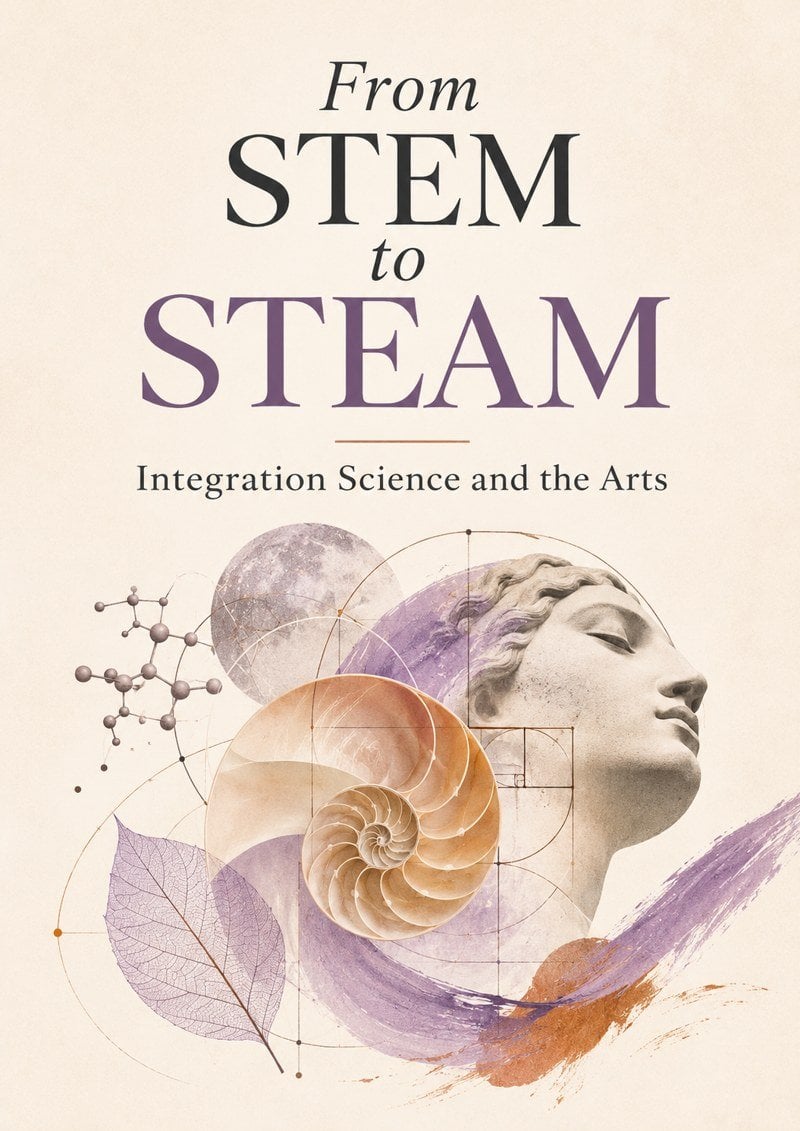
From STEM to STEAM: Integrating Science and the Arts, poster
S

Science

Asking questions and testing ideas against the world.

T

Technology

Tools that extend what hands and minds can do.

E

Engineering

Designing, building and improving under real limits.

A

Arts

Imagination, beauty, meaning and the human point of view.

M

Mathematics

Pattern, structure and the language of proof.

Why it matters now

The future will not ask which subject a problem belongs to.

Real problems cross subjects.

Climate, health, cities and AI need people who can move between science, design and human values.

Creativity is a core skill.

Employers now rank creative thinking near the top of the skills they need, and the OECD now tests it in PISA.

Making makes learning stick.

When students build, test and explain, they understand more deeply and remember for longer.

AI changes what is valuable.

As machines take on routine work, imagination, judgement and taste become what people bring.

Did you know?

Four markers on the road to STEAM.

2006

Georgette Yakman first set out STEAM as a framework for teaching across subjects

Yakman, STEAM Education, 2008
1980

Seymour Papert published Mindstorms, the root of today’s maker and coding classrooms

Papert, Mindstorms, 1980
Top 2

creative thinking is one of the two core skills employers rate highest

World Economic Forum, Future of Jobs Report 2023
2022

the first time PISA tested students’ creative thinking around the world

OECD, PISA 2022 Results, Volume III, 2024
The programme

Eight modules. One creative classroom.

Each module mixes a short input, a hands-on challenge teachers do themselves, a strategy to try with a class, and reflection on what happened. The colours show which letters each module leans on most.

01

Why STEAM?

From subjects to systems

The big problems of this century do not arrive sorted into subjects. Teachers explore why the arts belong beside science and maths, and where the idea of STEAM came from.

  • The history of STEM and the move to STEAM
  • Integration: from multi- to trans-disciplinary
  • What the research says, and what it does not
  • Mapping STEAM in your own school
02

The Creative Mind

Creativity can be taught

Creativity is not a gift for the few. Teachers meet the thinking tools shared by scientists and artists, and practise them with their own classes.

  • Observing, imaging, abstracting and patterning
  • Divergent and convergent thinking
  • Analogy, metaphor and play
  • Building a classroom where ideas are safe
03

Design Thinking

Empathise, define, ideate, prototype, test

A simple, human-centred way to solve problems. Teachers run a full design cycle and learn to coach students through each stage.

  • Starting with people, not products
  • Framing a good problem
  • Rapid prototyping and feedback
  • Failing forward: iteration as learning
04

Making and Tinkering

Learning by building

Students learn deeply when they build things they care about. This module brings constructionism, maker spaces and the tools that make them work.

  • Papert and constructionism
  • Projects, passion, peers and play
  • Low-cost making: card, code and circuits
  • Safety, materials and managing a maker space
05

Art Meets Science

Seeing is understanding

Drawing, visualisation and storytelling help students see what they study. Teachers try observation drawing, data art and science communication.

  • Observation drawing in science
  • Data visualisation as an art form
  • Pattern and proportion: nature and number
  • Telling the story of an idea
06

Code, AI and Creativity

New tools for making

Coding and AI open new ways to make music, images and models. Teachers explore creative coding and how to use AI as a partner, not a shortcut.

  • Creative coding with block and text languages
  • Generative art and music
  • AI as a creative partner: uses and limits
  • Originality, credit and honesty
07

Assessing Creativity

What gets valued gets learned

If creativity is not assessed, it gets squeezed out. Teachers build simple rubrics, portfolios and feedback that make creative thinking visible.

  • What creative thinking looks like in work
  • Rubrics, portfolios and process journals
  • Feedback that keeps ideas alive
  • Creative thinking in international assessment
08

Leading a STEAM School

From one class to a culture

One great project is a start. This module helps leaders plan time, spaces, teams and partners so STEAM becomes part of how the school works.

  • Timetables and team teaching
  • Cross-curricular projects across a year
  • Partners: museums, makers and industry
  • Measuring impact and sharing it
Art and science were never apart

The greatest scientists have often been artists too.

Leonardo da Vinci

drew to understand: his anatomy and water studies are science made visible.

Ada Lovelace

called her work “poetical science” and saw that a machine might one day compose music.

Richard Feynman

learned to draw in his forties and sold his sketches under the name “Ofey”.

Nobel scientists

are far more likely than other scientists to keep up serious arts and crafts.

Source for the last card: Root-Bernstein et al., “Arts Foster Scientific Success”, 2008.
Sample projects

What STEAM looks like in a classroom.

Six projects teachers design and test during the programme. Each one joins two letters, so students use both kinds of thinking at once.

Science + Arts

Sound of the cosmos

Students turn real space data into music and explain what the listener hears.

Engineering + Arts

Kinetic sculpture

Design a moving sculpture powered only by wind, water or gravity.

Maths + Arts

Nature’s numbers

Find spirals, symmetry and the golden ratio in plants and shells, then design with them.

Technology + Science

Citizen sensors

Build simple sensors to map air or noise around school and present the data as art.

Technology + Arts

Story machines

Code an interactive story or game about a real scientific idea.

Engineering + Science

Design for one person

Interview a user, then prototype a tool that makes one daily task easier for them.

Outcomes

What teachers take back to school.

  1. Plan a cross-curricular STEAM project from start to finish
  2. Run a full design-thinking cycle with a class
  3. Use making, coding and AI as creative tools
  4. Teach creative thinking on purpose, not by chance
  5. Assess creativity fairly with rubrics and portfolios
  6. Lead STEAM beyond one classroom, across a school
“The arts and sciences are avatars of human creativity.”
Mae Jemison, astronaut
The thinkers

The minds behind STEAM.

Leonardo da VinciLeonardo da VinciNotebooks
Ada LovelaceAda Lovelace“Poetical science”
Richard FeynmanRichard FeynmanPhysicist and artist
Seymour PapertSeymour PapertMindstorms
Mitchel ResnickMitchel ResnickLifelong Kindergarten
Sir Ken RobinsonSir Ken RobinsonOut of Our Minds
Howard GardnerHoward GardnerFrames of Mind
John MaedaJohn MaedaSTEM to STEAM at RISD
Georgette YakmanGeorgette YakmanThe STEAM framework
Mae JemisonMae JemisonTeach arts and sciences together
Neri OxmanNeri OxmanThe Krebs Cycle of Creativity
Michèle Root-BernsteinMichèle Root-BernsteinSparks of Genius
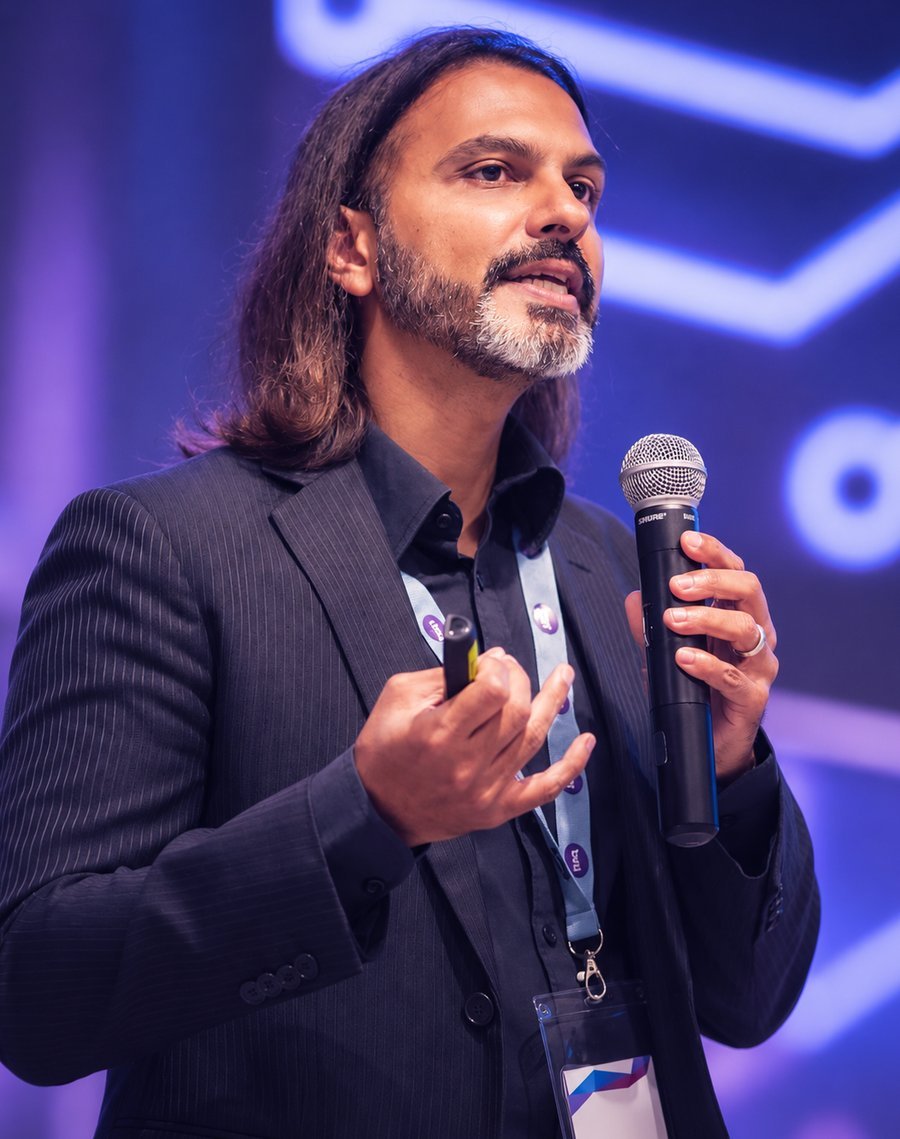
Rohan Roberts speaking on stage
The designer

Designed by Rohan Roberts.

Rohan Roberts is the lead designer of From STEM to STEAM. He built it for teachers who want their students to think like scientists and create like artists, and to see that these are not two different things.

The programme draws on research into creativity, design thinking and constructionism, and turns it into projects, routines and assessment that work in real classrooms.

How it works

A programme you learn by making.

Short input

Key ideas from the research, in plain words.

Make it

Teachers do each challenge themselves first.

Try it

One project or routine to test with a real class.

Show and reflect

Teachers share work, results and next steps.

Keep exploring

Related.