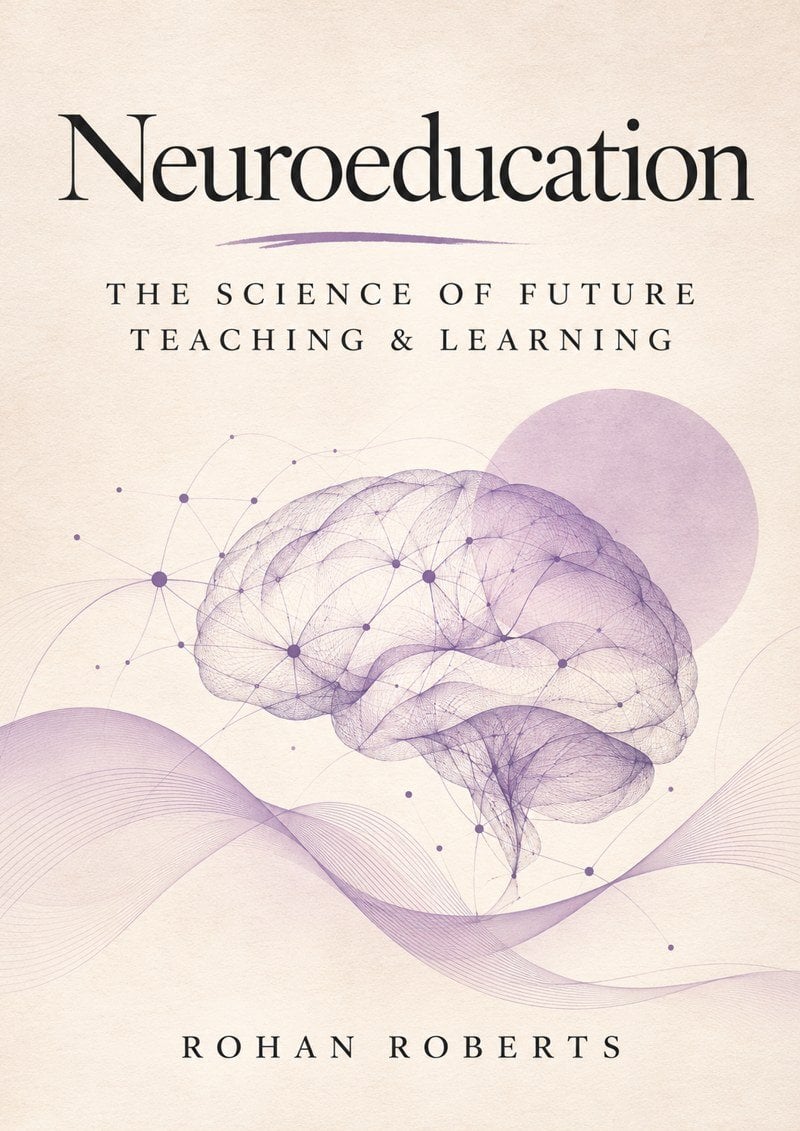
NeuroeducationThe science of future teaching and learning
A professional learning programme for teachers and school leaders. Eight modules on how the brain learns, what the evidence says, and how to bring it into every classroom.
Programme designed by Rohan Roberts · lead designer
Teaching is brain work. It is time every teacher knew how the brain learns.
Teachers change brains for a living.
Every lesson rewires the learners in the room. Knowing how that happens is as basic to teaching as anatomy is to medicine.
AI is changing what school is for.
When machines can store and fetch facts, schools need to build deep understanding, attention, judgement and wellbeing: all things the learning sciences can guide.
Myths cost time and trust.
Brain myths still shape lessons and products. Teachers who can read the evidence spend their time on what works.
Wellbeing is a learning issue.
Sleep, stress and belonging shape what students can learn. Neuroeducation gives teachers a shared, evidence-based language for them.
Did you know?
Four facts every teacher should know.
86 billion
neurons in the human brain
Azevedo et al., 2009
about 20%
of the body’s energy is used by the brain, which is about 2% of body weight
Raichle and Gusnard, 2002
mid-20s
when the prefrontal cortex, which helps plan and control impulses, is still maturing
Blakemore, Inventing Ourselves, 2018
1885
Hermann Ebbinghaus first measured the forgetting curve
Ebbinghaus, Memory, 1885
The programme
Eight modules. One learning brain.
The modules follow the path of learning itself: from the cell to the classroom. Each one mixes short input, discussion, a classroom strategy to try, and reflection on what happened.
01
Module 1
The Learning Brain
Plasticity, networks and what it means to learn
Every lesson physically changes a brain. Teachers meet neurons, synapses and the networks that link them, and see why practice strengthens connections and why learning takes time.
Neuroplasticity: the brain rewires with experience
Neurons, synapses and myelin in plain words
Prior knowledge as the hook for new learning
Why effort and struggle are signs of learning
02
Module 2
Emotion, Belonging and Learning
We feel, therefore we learn
Emotion is not the enemy of thinking: it steers it. This module draws on affective neuroscience to show why safety, belonging and meaning sit underneath every good lesson.
Emotional thought and the purpose of learning
Threat, safety and the stressed brain
Belonging, relationships and motivation
Designing lessons that matter to students
03
Module 3
Attention and Memory
How information becomes knowledge
Attention is limited, and memory is built, not recorded. Teachers learn how working memory and long-term memory work, and the strategies that make learning last.
Working memory and cognitive load
Retrieval practice and spacing
Interleaving and worked examples
Attention, distraction and devices
04
Module 4
Sleep, Stress, Movement and Wellbeing
The body that carries the brain
A tired, stressed or inactive brain struggles to learn. This module covers what the research says about sleep, stress, exercise and nutrition, and what schools can change.
Sleep and memory consolidation
Chronic stress and learning
Movement, exercise and attention
Wellbeing as a condition for learning
05
Module 5
The Adolescent Brain
A second window of opportunity
The teenage brain is not a broken adult brain. It is remodelling. Teachers learn how the social brain, risk and reward develop, and how to work with them.
Brain development through the teens and twenties
The social brain and peer influence
Risk, reward and decision making
Teaching with adolescents, not against them
06
Module 6
Reading, Number and the Brain
Cultural inventions on an ancient brain
The brain was not built to read or to do algebra, so it recycles older circuits. This module explores how reading and number develop, and why some children struggle.
How the brain learns to read
The number sense and maths learning
Dyslexia and dyscalculia
Deep reading in a digital age
07
Module 7
Neuromyths
What the evidence really says
Classrooms are full of brain-based claims that the science does not support. Teachers learn to spot neuromyths, read research critically and ask "where is the evidence?"
Learning styles, left and right brain, 10%
Brain Gym and other quick fixes
How to read a study and its claims
Healthy scepticism as a professional habit
08
Module 8
From Lab to Classroom
Research-informed practice
Neuroscience rarely tells a teacher what to do on Monday. Psychology and classroom research bridge the gap. Teachers design, test and share one change in their own practice.
The bridge from neuroscience to teaching
Formative assessment and feedback
Teacher inquiry and action research
Building a research-informed school culture
Test yourself
Myth or evidence?
Many teachers have met these ideas in training. Each card is a popular claim. Tap it to see what the research found.
Outcomes
What teachers take back to the classroom.
Explain, in plain words, how learning changes the brain
Design lessons that respect attention and working memory
Use retrieval, spacing and feedback with confidence
Support wellbeing, sleep and belonging as part of learning
Spot a neuromyth and ask for the evidence
Run a small inquiry in their own classroom and share it
“It is literally neurobiologically impossible to build memories, engage complex thoughts, or make meaningful decisions without emotion.”
Mary Helen Immordino-Yang
The thinkers
The minds behind the science.
Mary Helen Immordino-YangEmotions, Learning, and the Brain
Tracey Tokuhama-EspinosaMind, Brain, and Education Science
Kurt FischerFounder, Mind, Brain and Education, Harvard
Stanislas DehaeneHow We Learn
Usha GoswamiReading and the developing brain
Sarah-Jayne BlakemoreInventing Ourselves
Maryanne WolfProust and the Squid
Lisa Feldman BarrettHow Emotions Are Made
Daniel WillinghamWhy Don’t Students Like School?
Paul Howard-JonesNeuroscience and education myths
John HattieVisible Learning
Dylan WiliamEmbedded Formative Assessment
The designer
Designed by Rohan Roberts.
Rohan Roberts is the lead designer of the Neuroeducation programme. He built it for teachers who want to understand the learning brain, not as a set of tricks, but as the science underneath their craft.
The programme brings together neuroscience, cognitive psychology and education research, the field known as Mind, Brain and Education, and turns it into practical, honest guidance for the classroom.
 Mary Helen Immordino-Yang
 Tracey Tokuhama-Espinosa
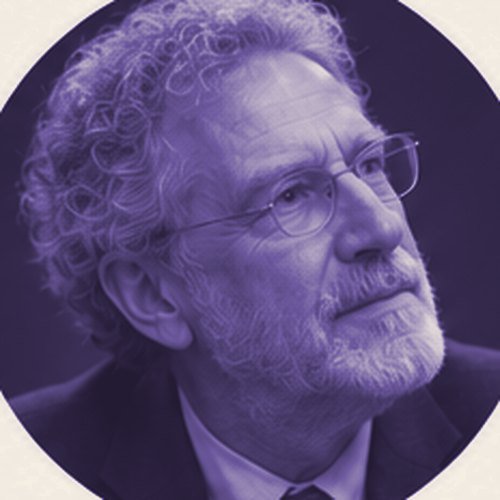 Kurt Fischer
 Stanislas Dehaene
 Usha Goswami
 Sarah-Jayne Blakemore
 Maryanne Wolf
 Lisa Feldman Barrett
 Daniel Willingham
 Paul Howard-Jones
 John Hattie
 Dylan Wiliam