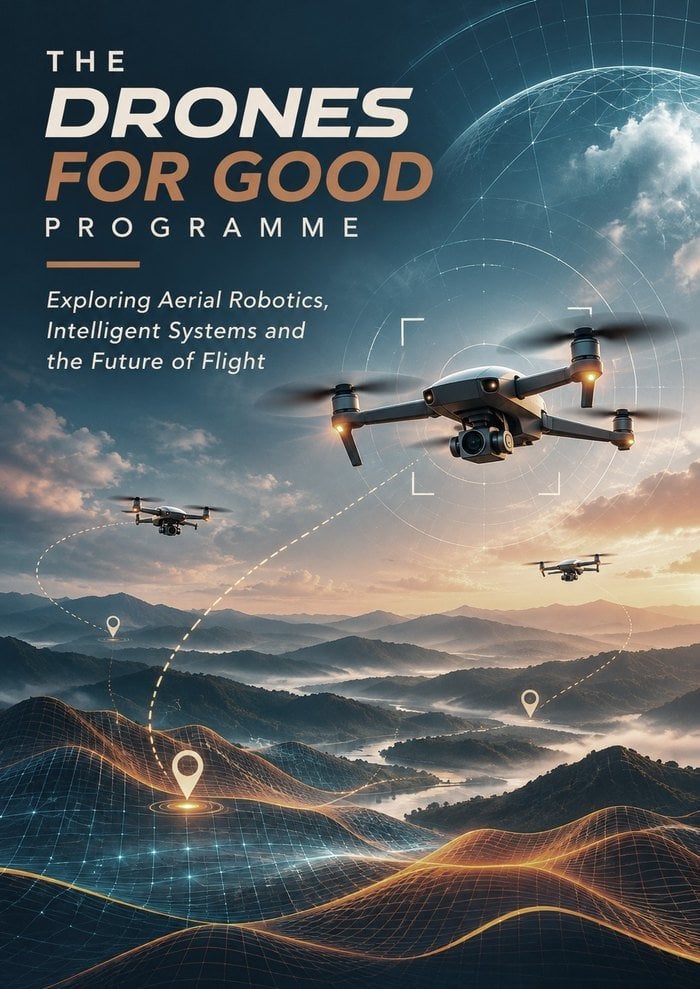
A two-part programme that uses drones as a way into the biggest ideas of our time: exponential technology, coding and computational thinking, and the Global Goals. Students learn how drones fly, fly them safely, code them, and design ways to use them for good.

Drones are one of the clearest examples of an exponential technology. Cheaper sensors, better batteries and smarter software have turned a military machine into something a student can hold in one hand and program in an afternoon.
They already deliver medicine to remote clinics, map farmland, search for people after earthquakes, count wildlife and film the world from new angles. In 2015 Dubai hosted the first UAE Drones for Good Award, a global competition for drones that help people, and the idea behind this programme is the same: start with the problem, then ask how a drone could help.
For students, the drone is also the perfect "hook". It makes coding physical: a line of code becomes a flip, a square, a search pattern in the air. And it makes the Sustainable Development Goals concrete: not a poster on the wall, but a mission to plan and fly.
Drones are changing delivery, farming, filmmaking, disaster response and conservation. Understanding them is a way to understand how all exponential technologies grow, converge and reshape the world.
Coding and computational thinking, the physics of flight, safe and responsible piloting, teamwork, and the habit of turning a technology towards a real problem.
Who should fly, and where? What happens to privacy when every street can be filmed from above? How do we make sure this technology is used for good?


Rohan Roberts was the lead designer of The Drones for Good Programme. He created it, first as the Wellington Drones Programme, and shaped both of its parts: eight theory modules on how drones work and why they matter, and a hands-on track of eighteen online and practical modules in coding and flight.
The programme treats the drone not as a toy but as a "hook": a small, exciting machine that opens the door to exponential technology, STEAM, problem-solving and the question every engineer should ask: how can this help?
The idea, the arc and the purpose: technology in the service of people and planet.
From exponential technology to the Global Goals, written for students.
Block coding, Python and camera control on real Tello EDU drones.
Theory in class, practice in the air, and a mission for good at the end.
“It is possible to fly without motors, but not without knowledge and skill.”Wilbur Wright, 1900
Moore's Law, exponential growth and the convergence of technologies that made drones possible.
The kinds of drones, how they are used today, and where the technology is heading.
Lift, thrust, weight and drag, and how four spinning propellers can hover, turn and climb.
The rules, risks and good habits every drone pilot needs before take-off.
The parts that make a drone work, and how they talk to each other.
How to look after a drone and its batteries so it stays safe and lasts.
Aerial photography and film: how drones changed the way we see the world, and how to use them well.
Drones in the service of people and planet, through the lens of the Global Grand Challenges and the UN Sustainable Development Goals.


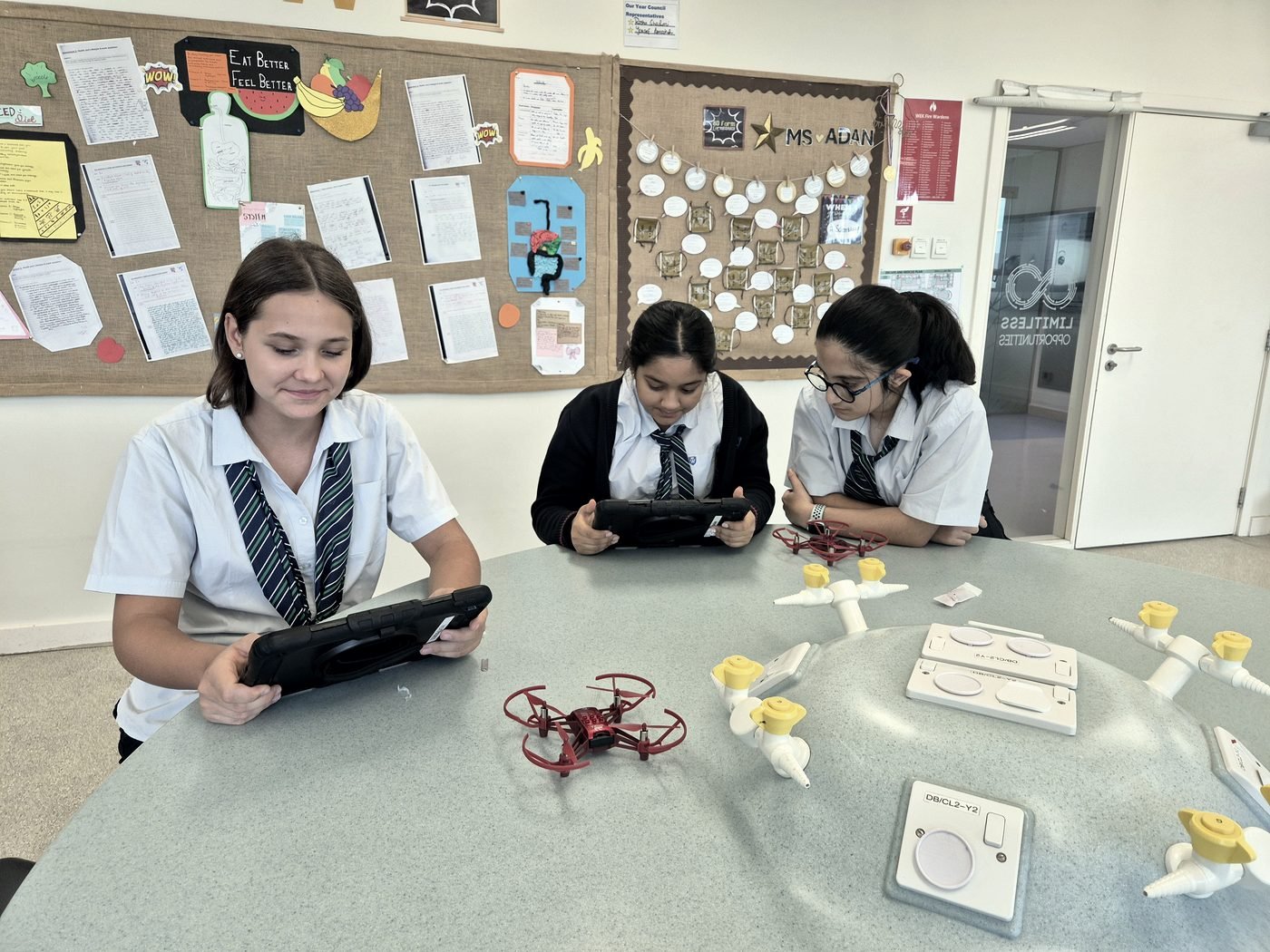
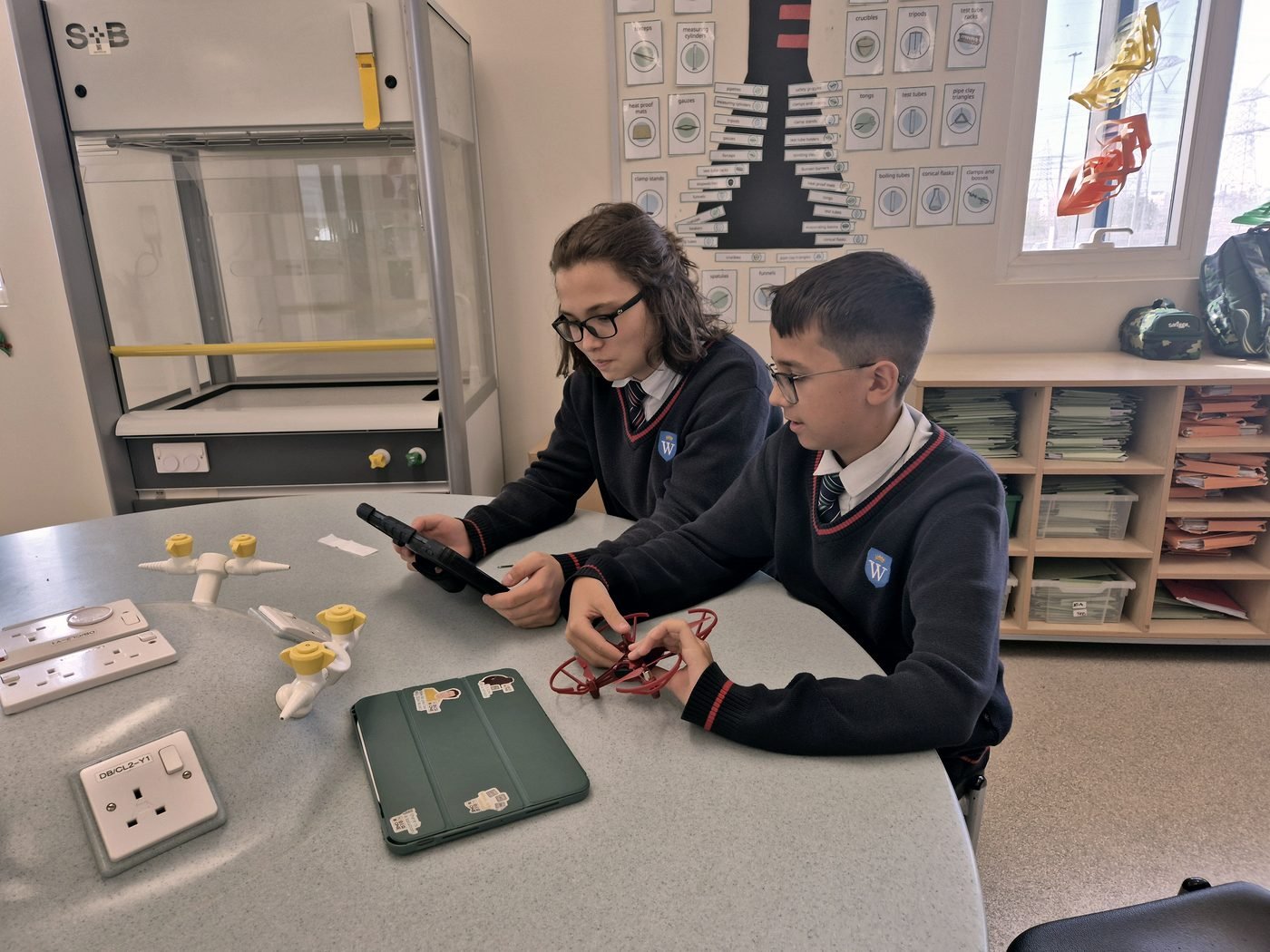
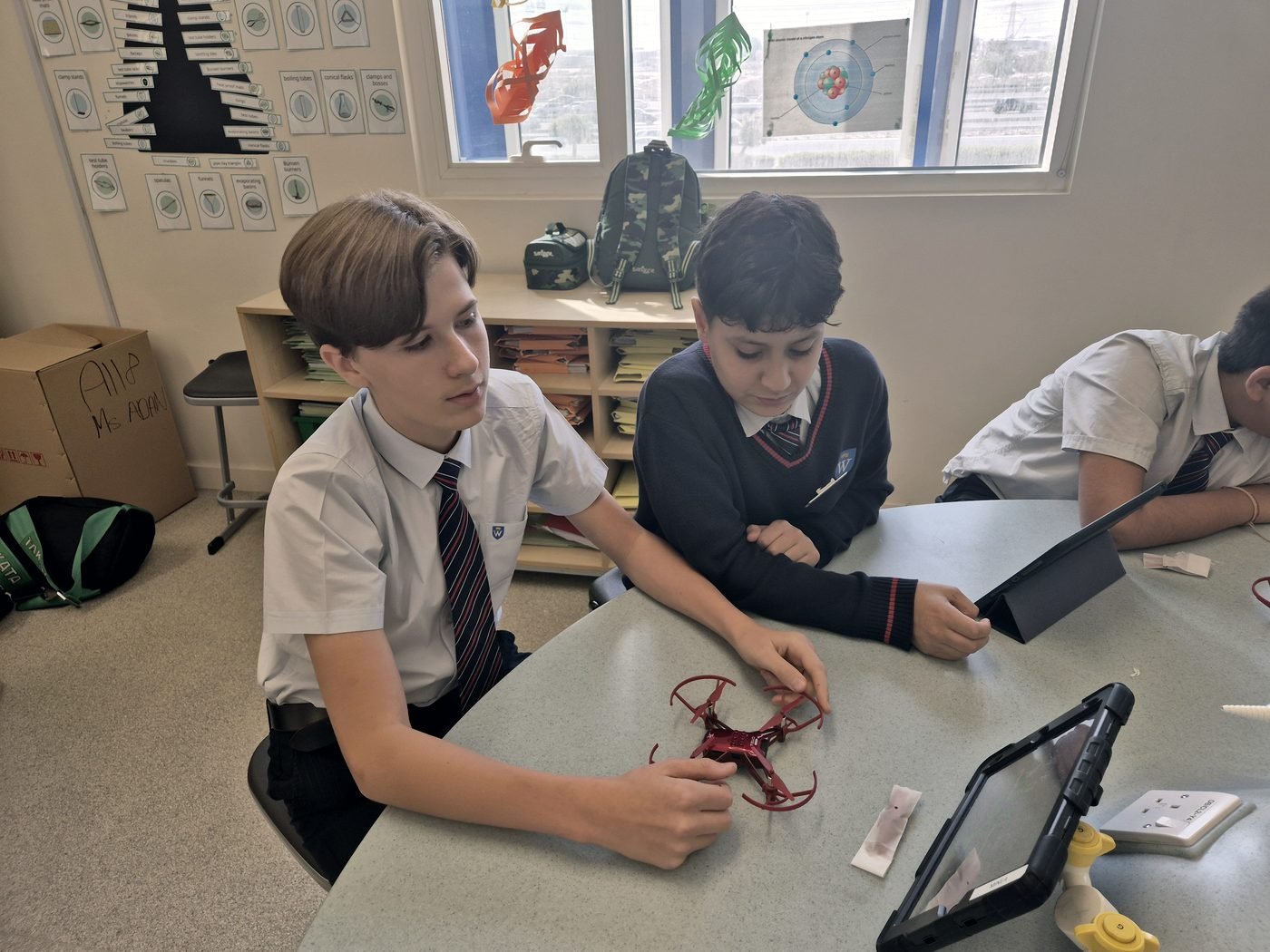
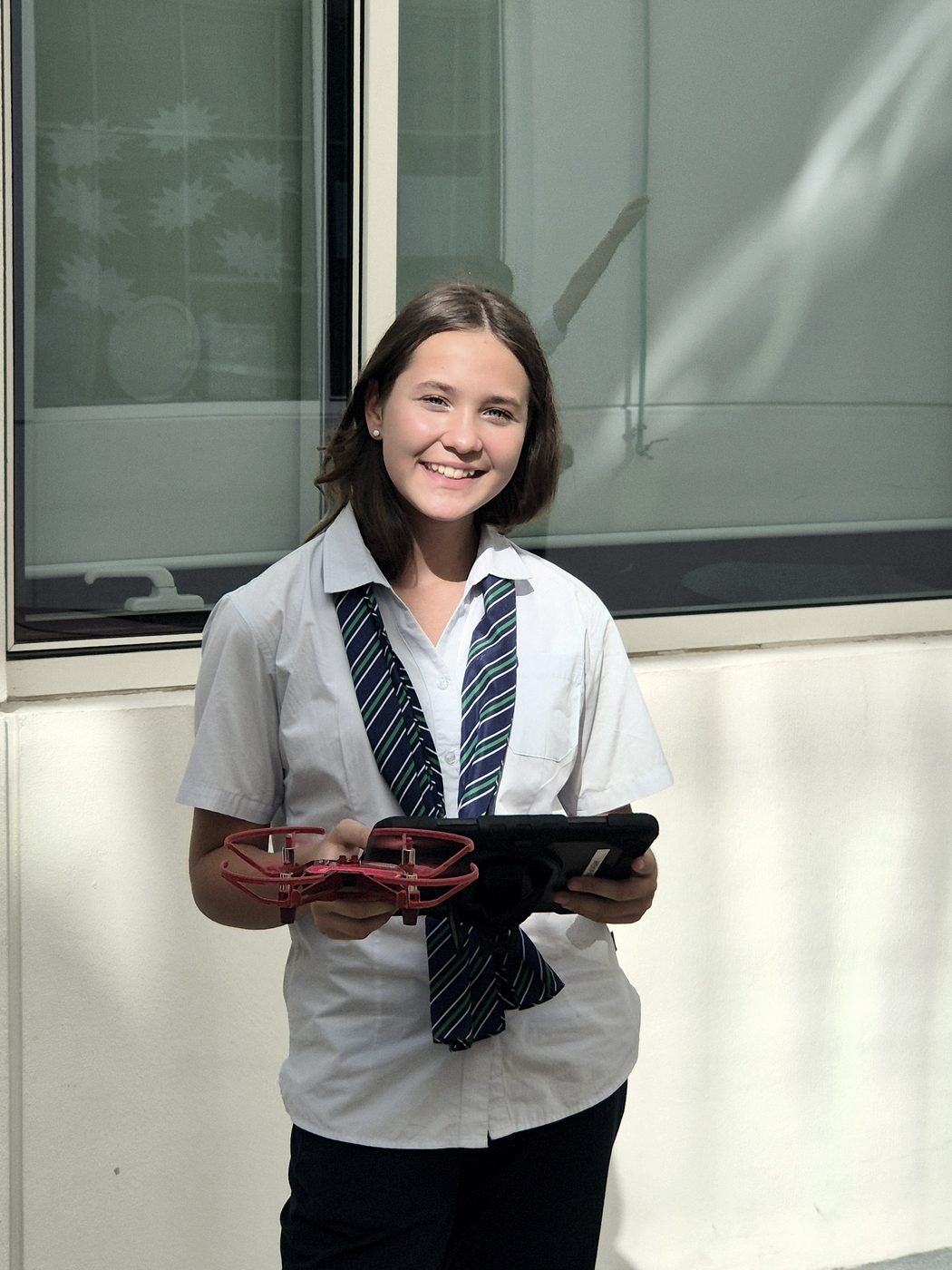
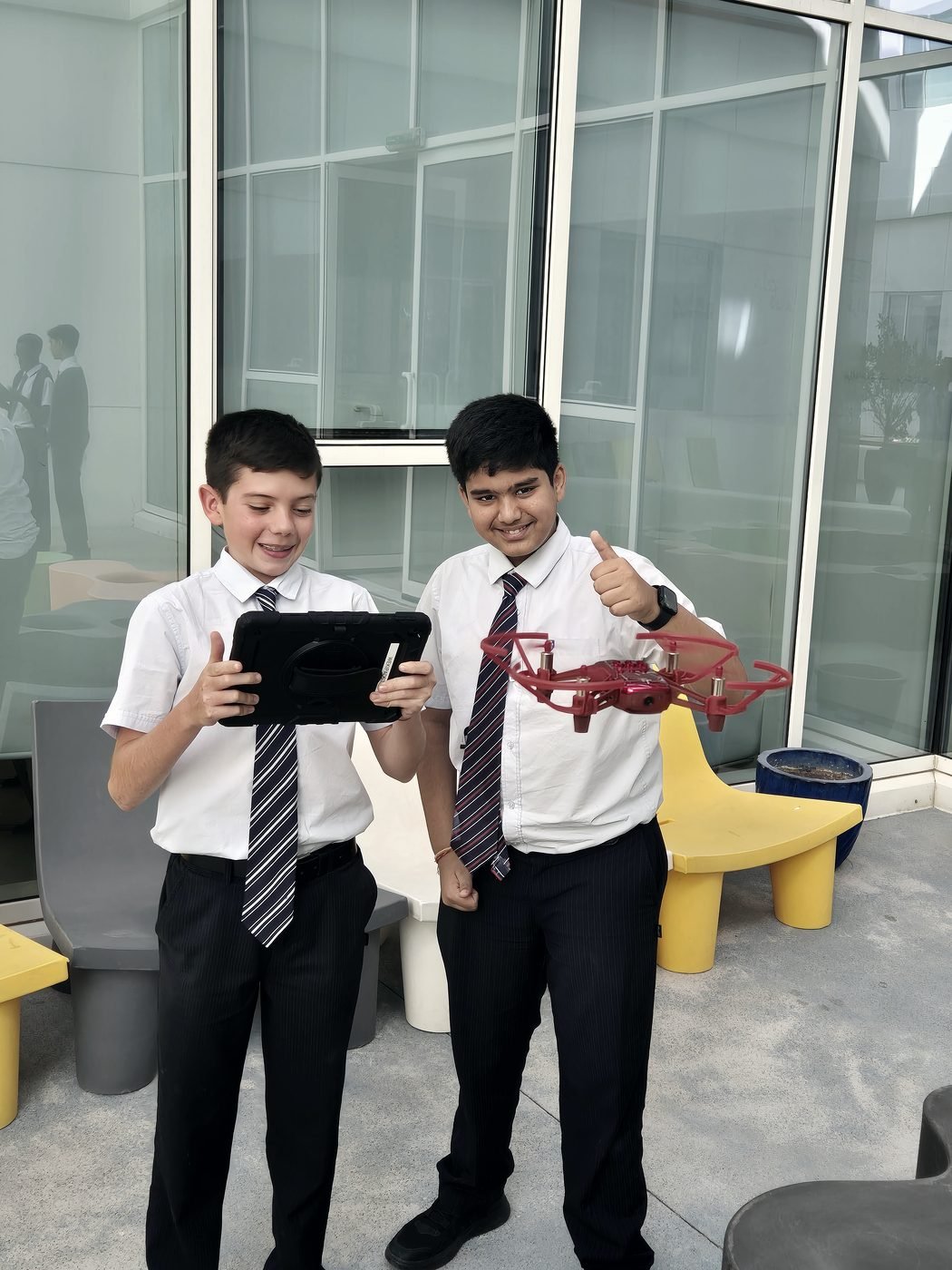
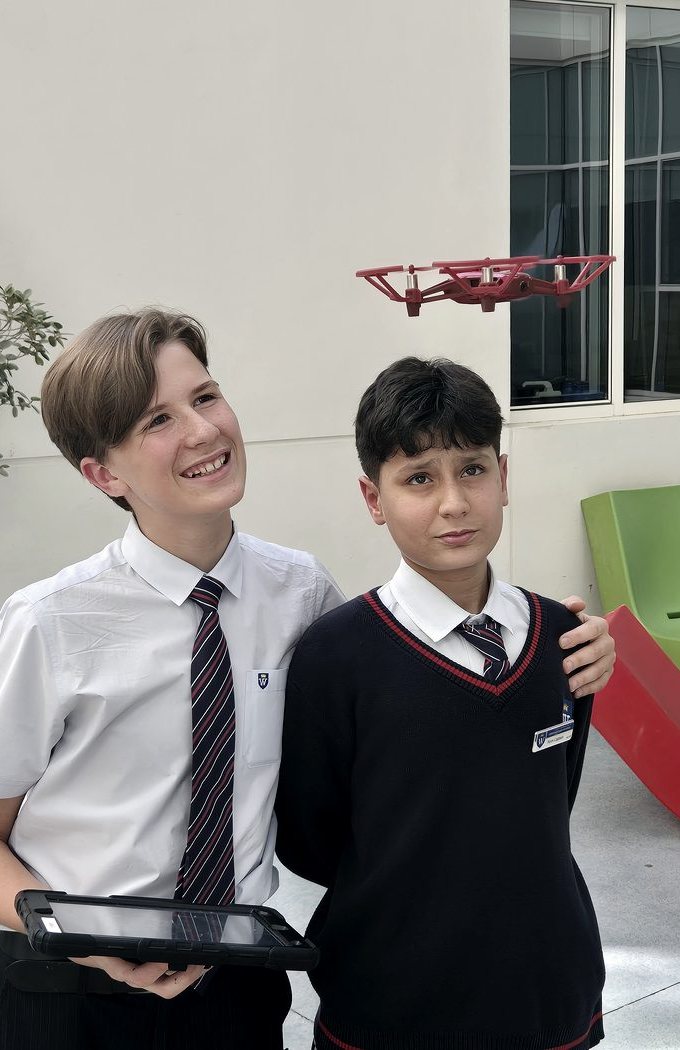
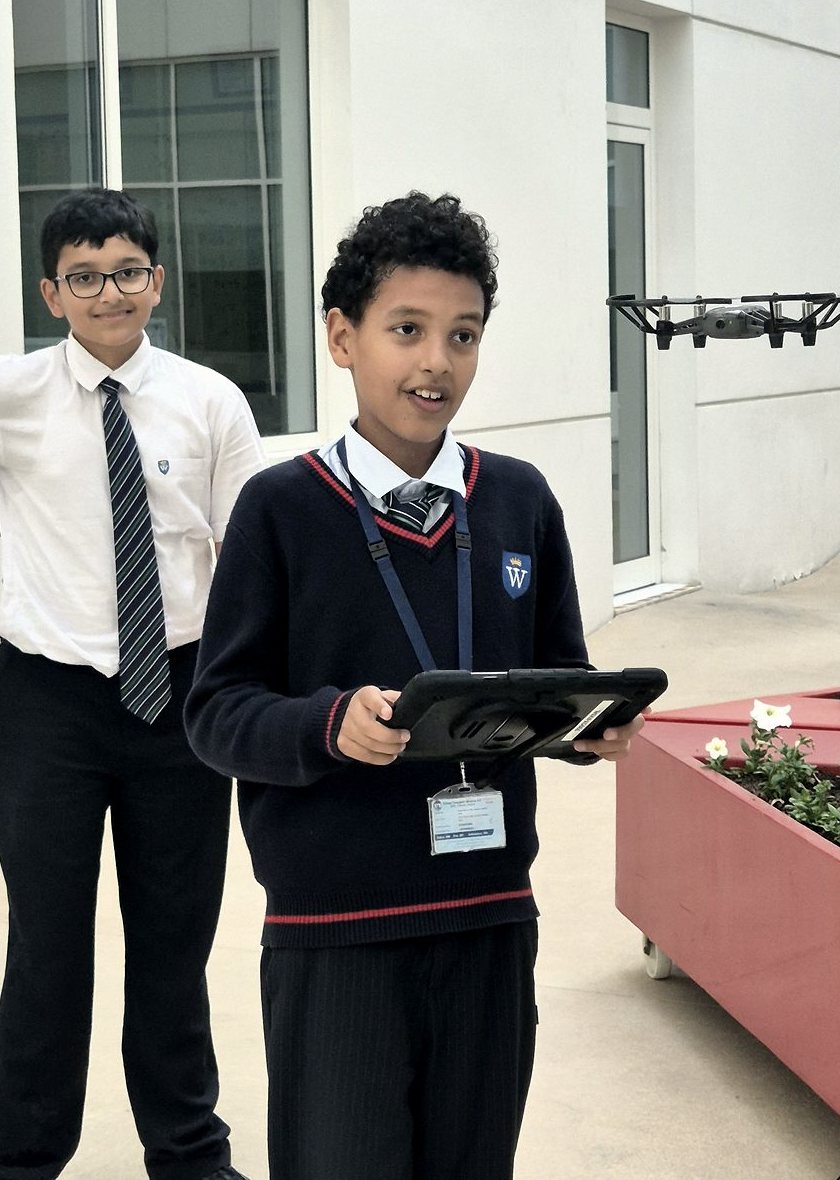
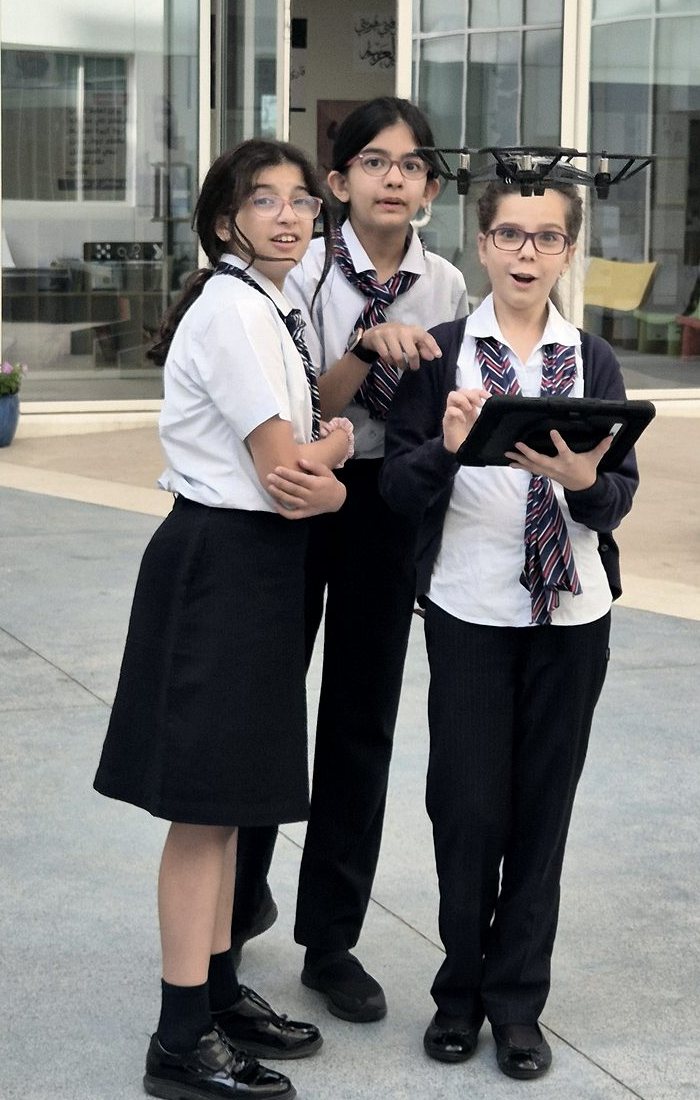
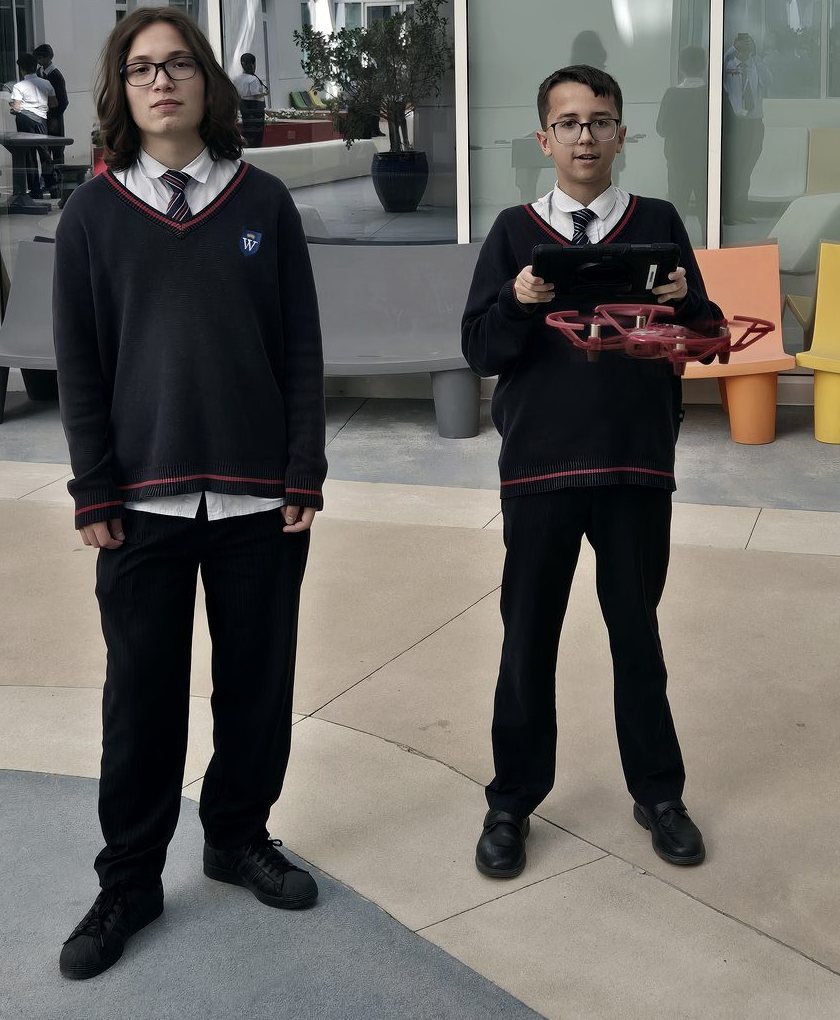
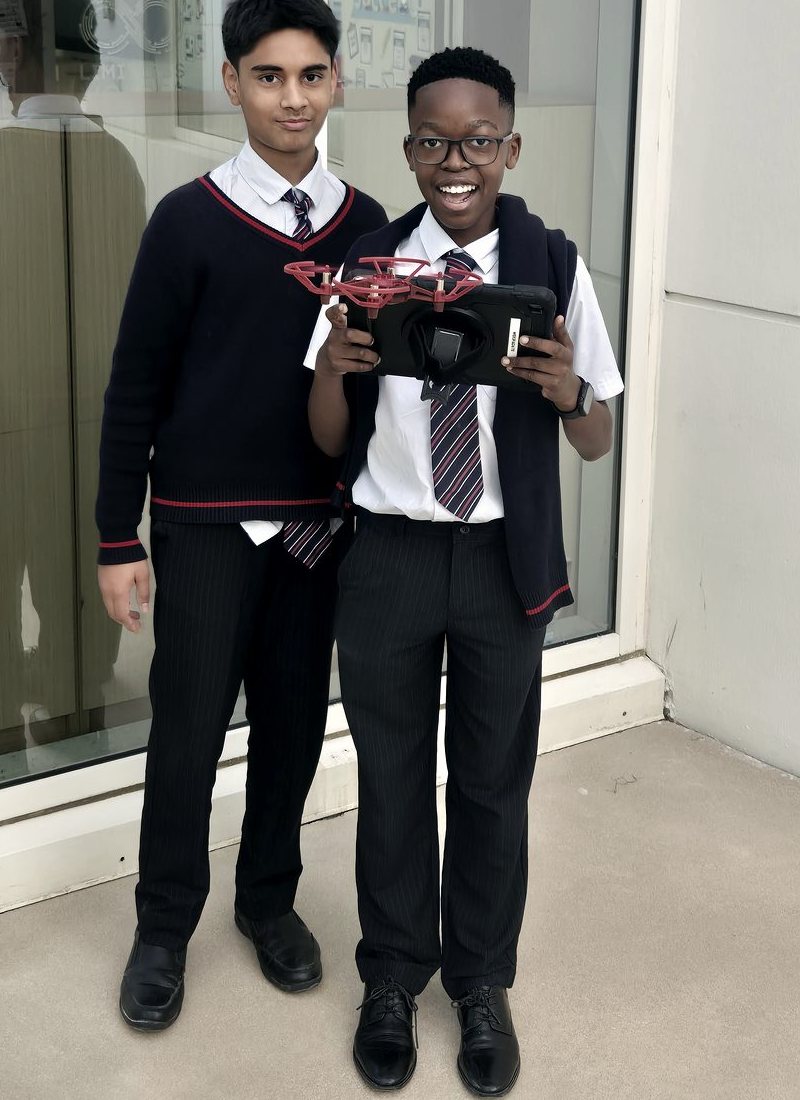
Online learning and practical demos with the DroneBlocks curriculum and Tello EDU drones. Students start with drag-and-drop blocks, test their code in a simulator, then fly it for real, and move on to Python and computer vision.
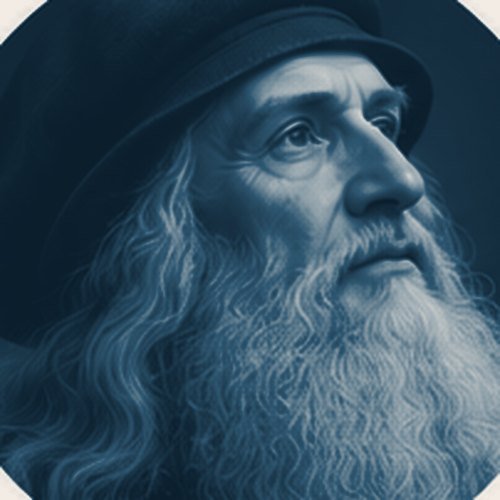
Leonardo da VinciThe aerial screw, c. 1489The first dream of a flying machine.
Nikola TeslaRadio control, 1898Built the first radio-controlled vehicle.
Craig ReynoldsBoids, 1987The simple rules behind flocks and swarms.
Chris AndersonDIY Drones and 3D RoboticsDrones for everyone.
Raffaello D'AndreaETH ZurichFlying machines that juggle, build and dance.
Vijay KumarAerial robot swarmsSwarms of small flying robots that work together.
Daniela RusMIT's AI and robotics labRobots for good.
Helen GreinerCo-founder of iRobotLater built tethered drones.
Missy CummingsPilot and autonomy researcherOne of the US Navy's first women fighter pilots, now a leading voice on safe autonomy.
Radhika NagpalThe KilobotsSwarms that build like termites.
Keller Rinaudo ClifftonZiplineDrones that fly blood and medicine to remote clinics.
Patrick MeierWeRoboticsDrones for disaster response and humanitarian aid.
Seymour Papert's constructionism (Mindstorms, 1980): children learn best when they program something they can see move. A Tello drone is Papert's turtle, taking off.
Jeannette Wing, "Computational Thinking" (Communications of the ACM, 2006): decomposition, patterns, abstraction and algorithms are skills for everyone, not only programmers.
David Kolb's experiential learning cycle (1984): plan, fly, reflect, improve. Every flight is an experiment.
Cindy Hmelo-Silver, "Problem-Based Learning: What and How Do Students Learn?" (2004): real, open problems build deeper understanding and teamwork.
Physics, maths, coding, design and art in one project: a drone dance is choreography and geometry at once.
The UN's 17 Sustainable Development Goals (2015) give every project a reason: who does this help?
Students write a program, test it in the simulator, then fly it: a square, a search pattern, an obstacle course, a dance in the air.
In teams, students choose one of the Sustainable Development Goals, design a drone mission that helps, and pitch it like a real start-up.
Students plan and shoot a short aerial film, safely and responsibly, about a place or an idea that matters to them.